
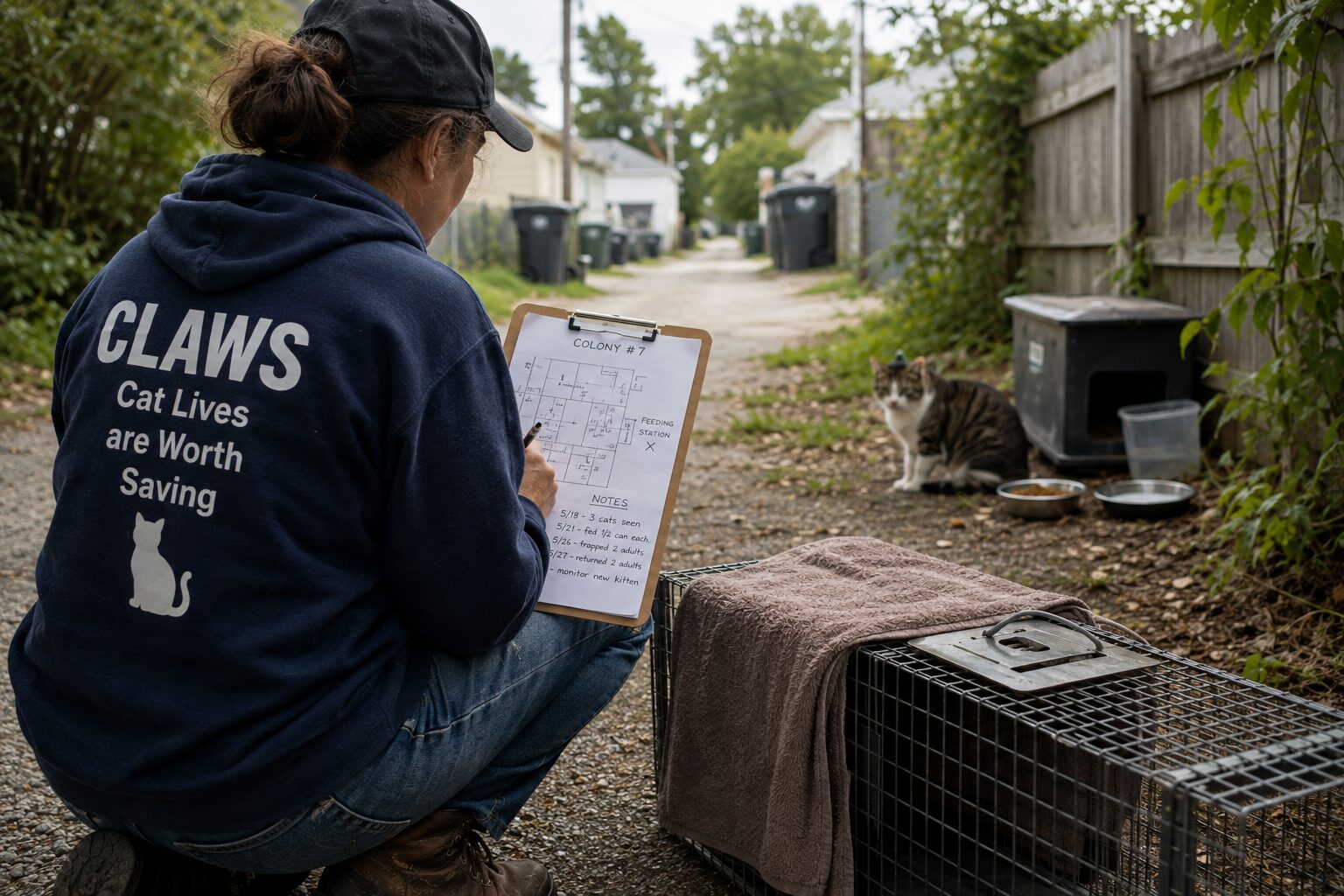
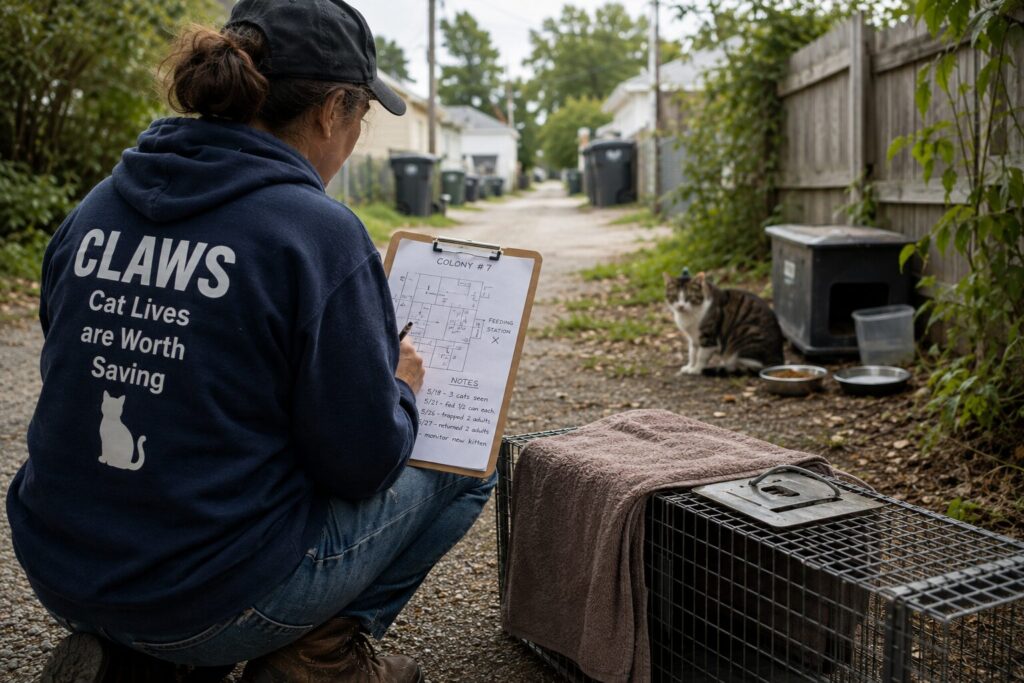
Trap-Neuter-Return works. But the difference between a colony that stabilizes and one that keeps producing kittens often comes down to something unglamorous: records. If you can’t tell at a glance who’s fixed and who isn’t, you end up re-trapping ear-tipped cats and missing the intact ones. Here are the seven things worth tracking for every colony.
- Location and boundaries. Where the colony actually is, feeding stations, shelter spots, and the edges where it blurs into the next one. A pin on a map beats a description every time.
- Individual cats. A photo, a name or ID, and distinguishing marks. Cats blur together fast; the photo is what keeps “the gray tom” from being four different cats.
- Spay/neuter status and date. The single most important field. Ear-tip status, who did the surgery, and when, so nobody re-traps a fixed cat.
- Medical history. Vaccines, tests, treatments, and any ongoing conditions. Especially useful when a cat comes back in months later.
- Who’s caring for it. Feeding schedule and which volunteer covers it, so coverage gaps show up before a station goes cold.
- Population over time. A dated census, not just today’s count. The trend line is how you prove, to yourself and to funders, that TNR is working.
- Outcomes. Returned, adopted, relocated, or lost. Closing the loop on each cat is what keeps the census honest.
You can absolutely keep all of this in a spreadsheet, and many caretakers do. The friction shows up when the colony changes weekly and the census has to be re-tallied by hand every time a cat is returned or a litter is pulled.
Purralytics keeps these seven in one place and does the tedious part for you: return a cat and the colony census updates itself, and every change is saved as a dated snapshot so the trend is always there when you need it. Try it free for up to three colonies.
Leave a Reply