
-
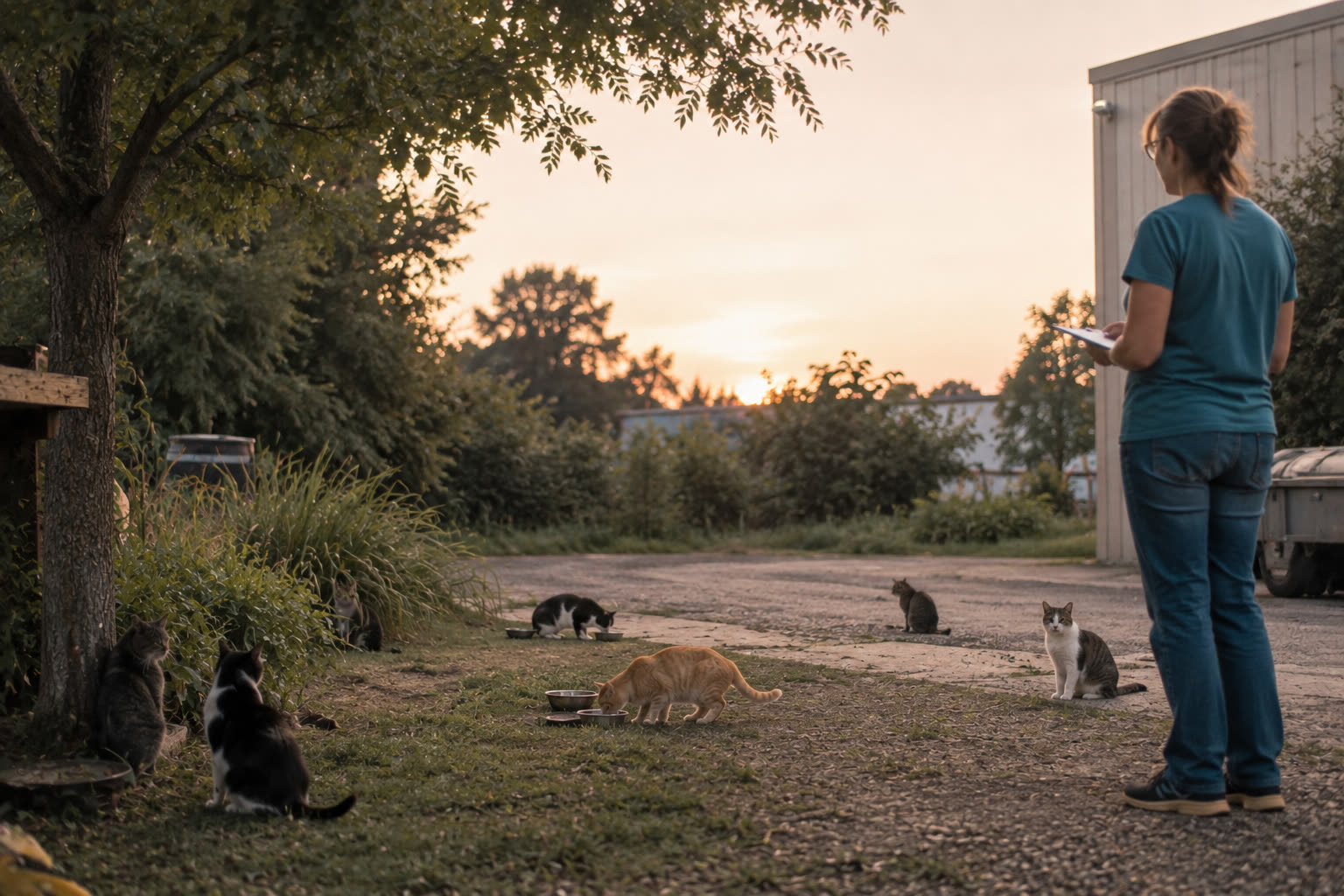
“About a dozen?” isn’t a number you can act on. A real colony census, tracked over time, tells you whether TNR is working, catches new arrivals early, and makes your case to funders. Here’s how to count, and why the trend matters more than the total.
-
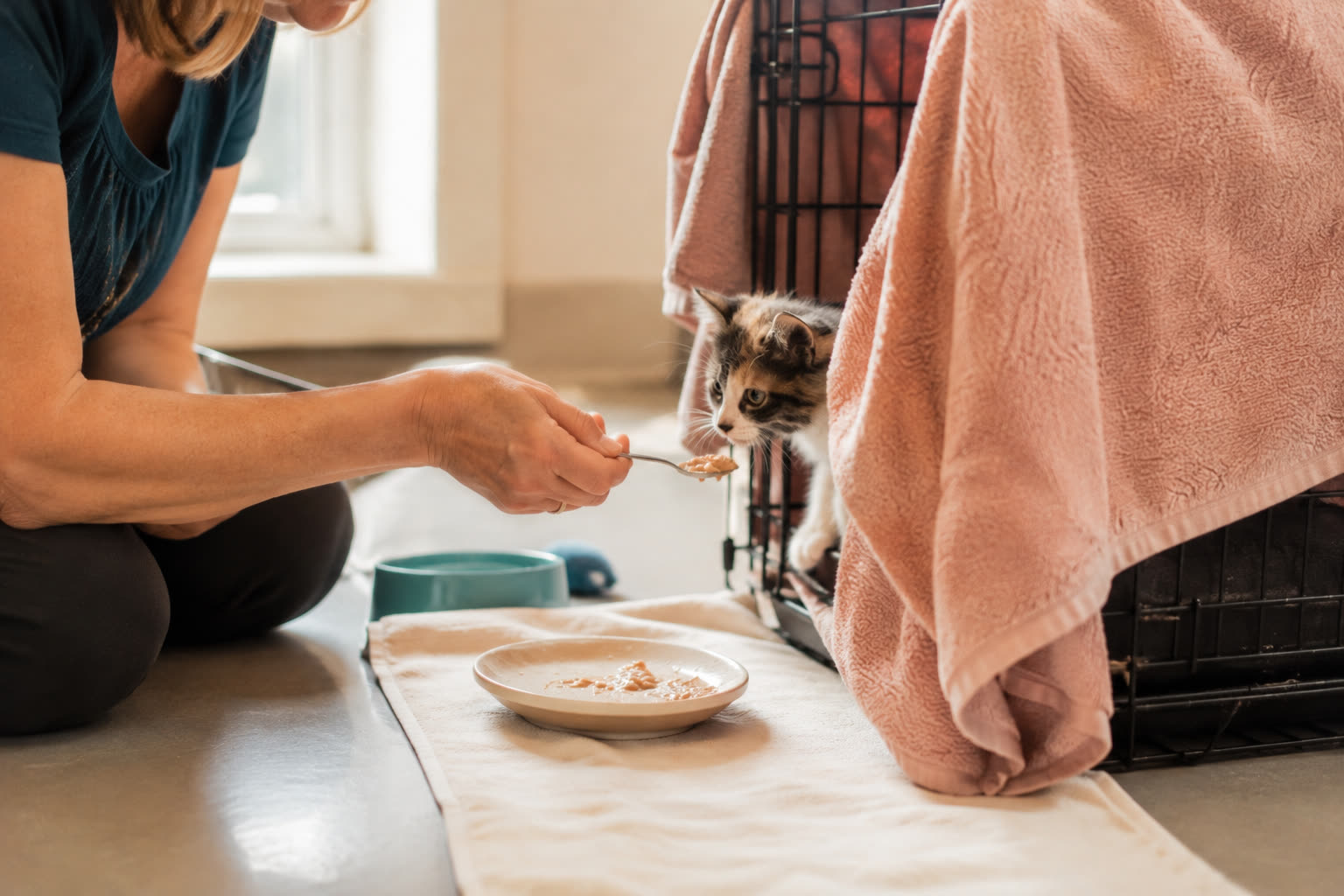
Caught early enough, a hissing, spitting feral kitten can become a purring lap cat. Caught late, it’s much harder. Here’s the socialization window that matters, and a realistic timeline for turning fear into trust.
-
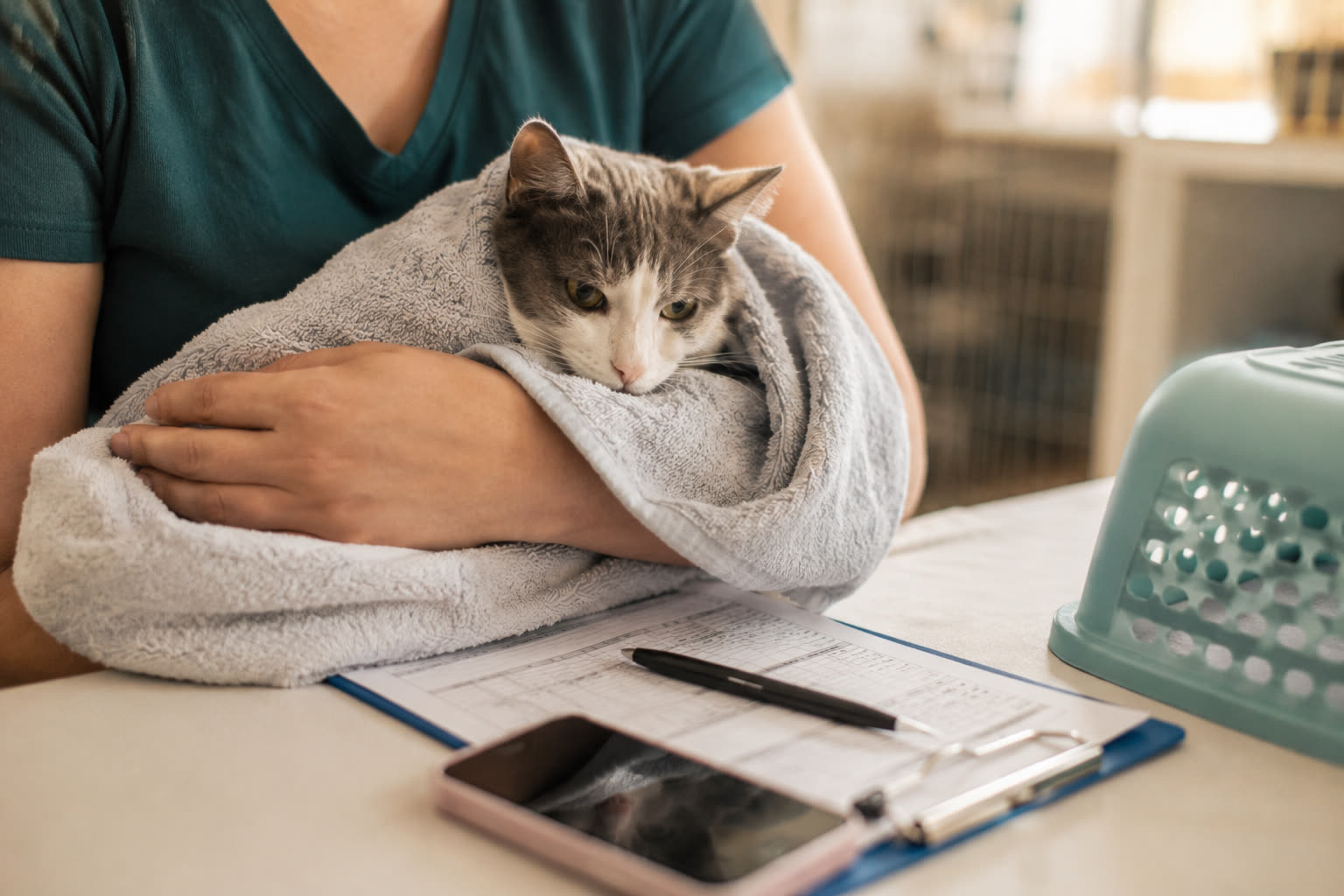
The intake record is the first page of a cat’s story with your rescue, and a good one saves you headaches for months. Here’s exactly what to capture the day a cat comes in, and why each field earns its place.
-
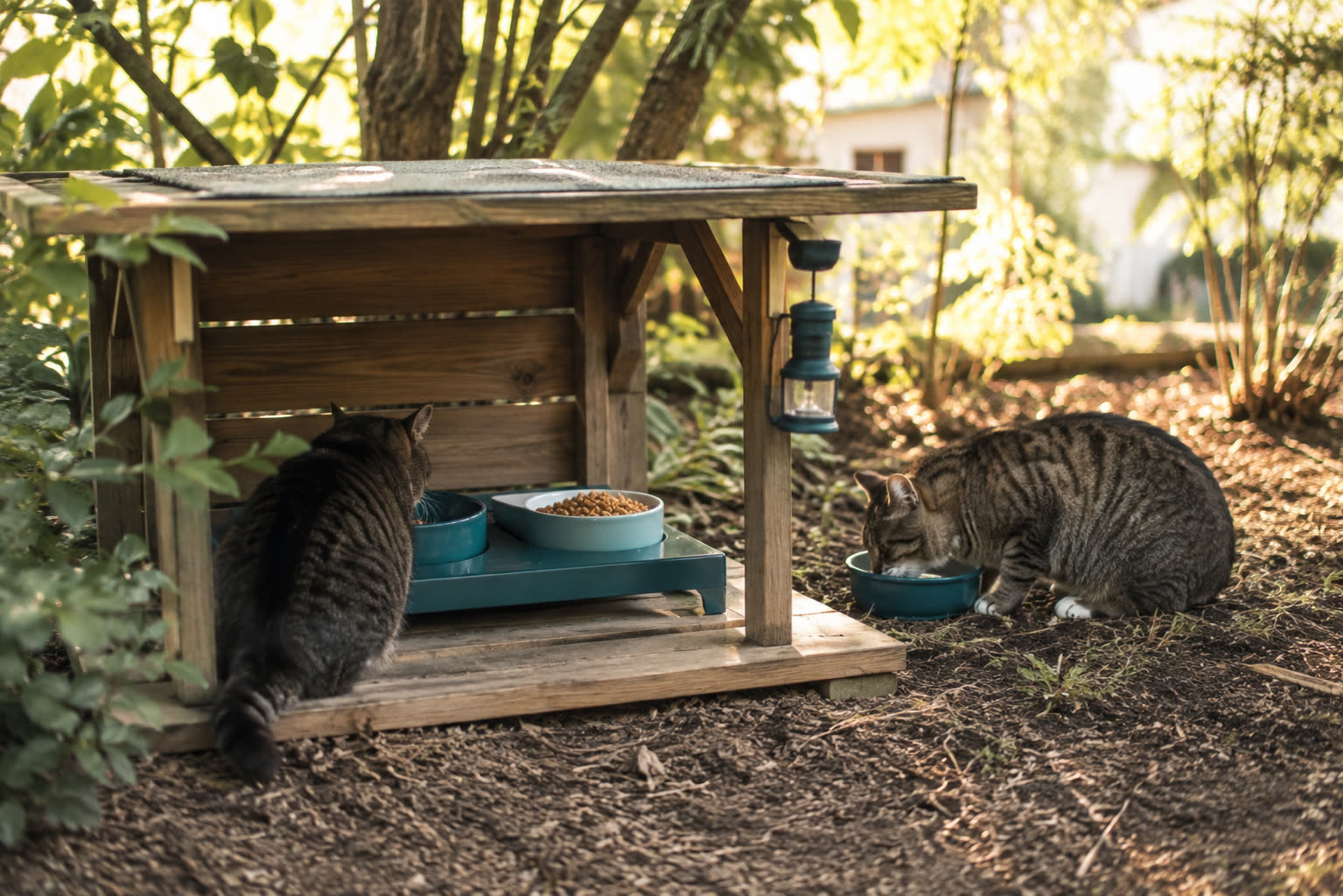
A good feeding station does more than fill bowls. It keeps a colony healthy, makes trapping easier, and gives you a consistent spot to watch for new arrivals or sick cats. Here’s how to set one up that works and keeps the peace with neighbors.
-
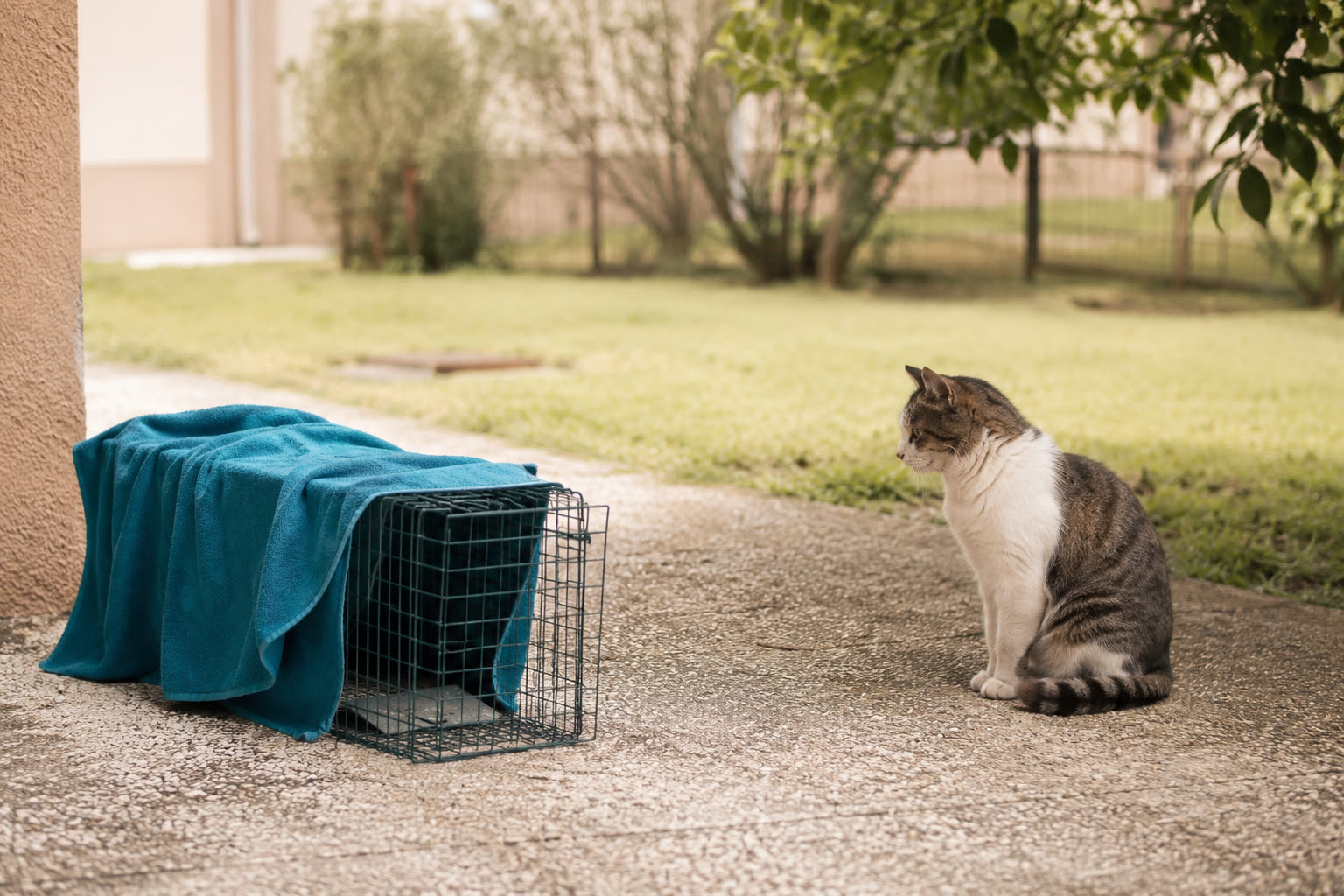
New to TNR and not sure where to start? Trap-Neuter-Return is the humane, effective way to stabilize a feral cat colony, and it’s more approachable than it looks. Here’s the whole process in plain language, from your first trap to the moment you let a cat go.
-
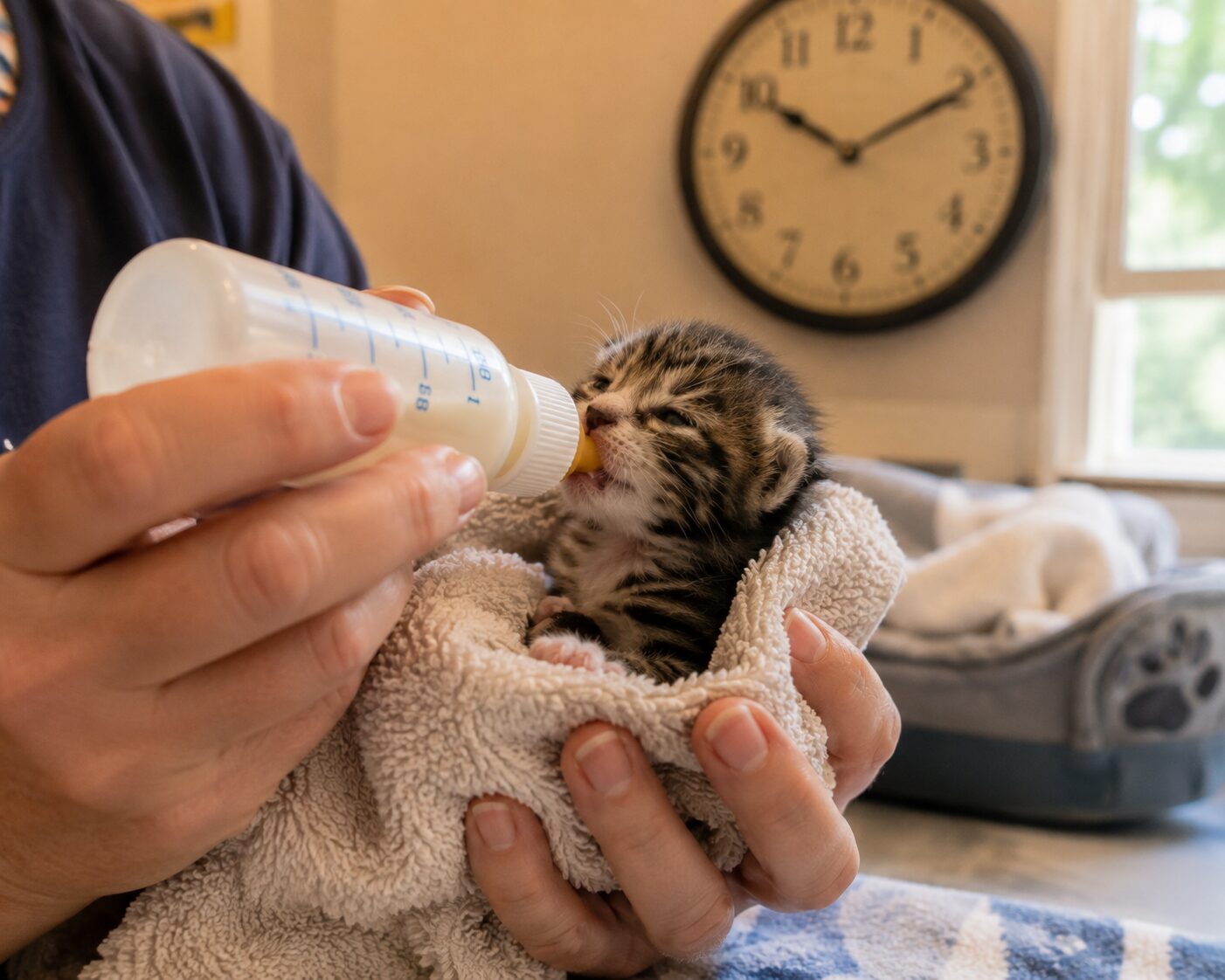
Orphaned kittens need to eat on a strict clock, and the right schedule changes fast as they grow. Here’s the age-by-age feeding schedule caregivers actually use, plus the warning signs that mean it’s time to call your vet.
-
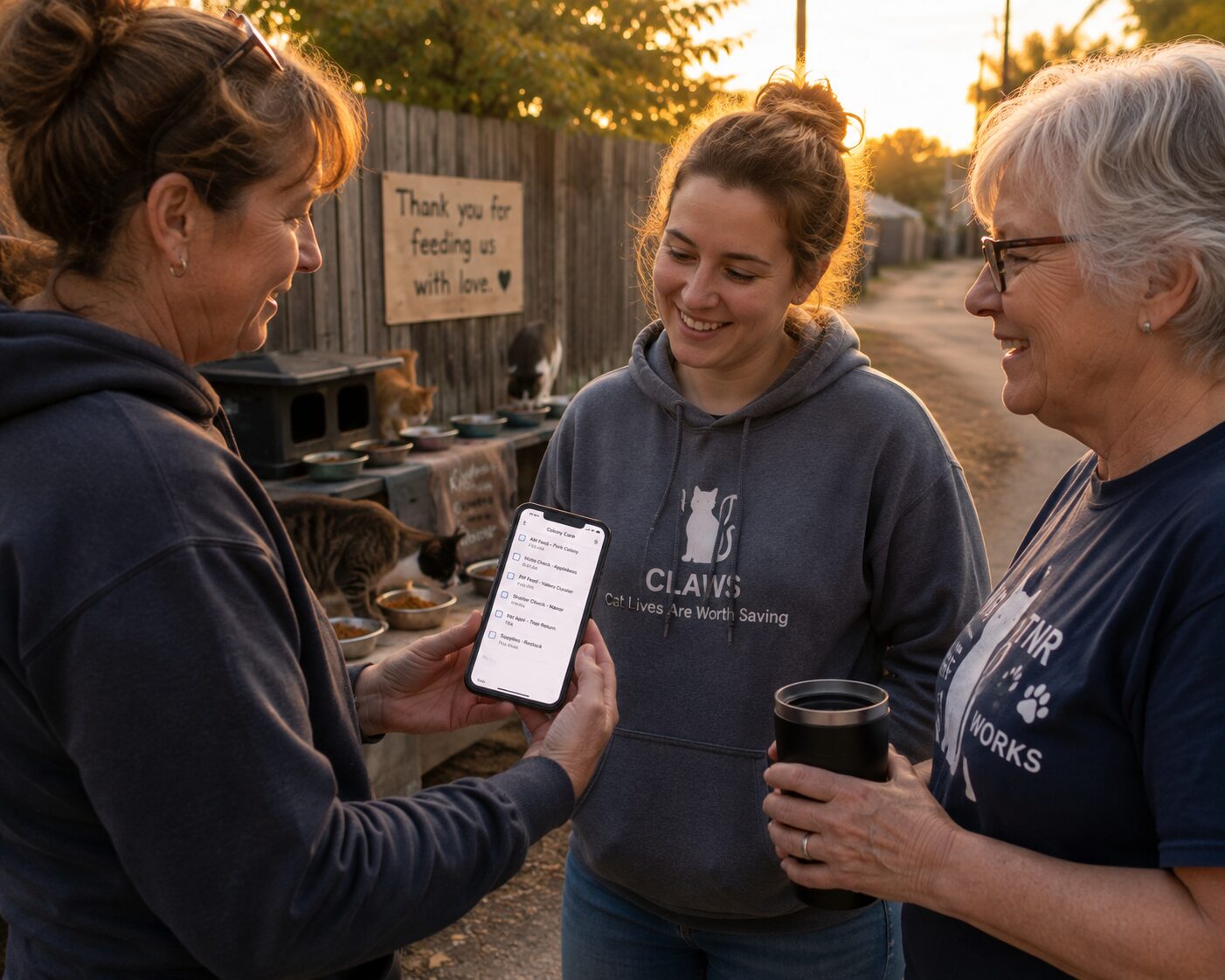
A feeding station covered by six different volunteers should be simple. In practice it’s a group chat with three conflicting ‘I got it’ replies and one missed morning. Here’s how to structure volunteer coverage so nothing falls through the cracks.
-
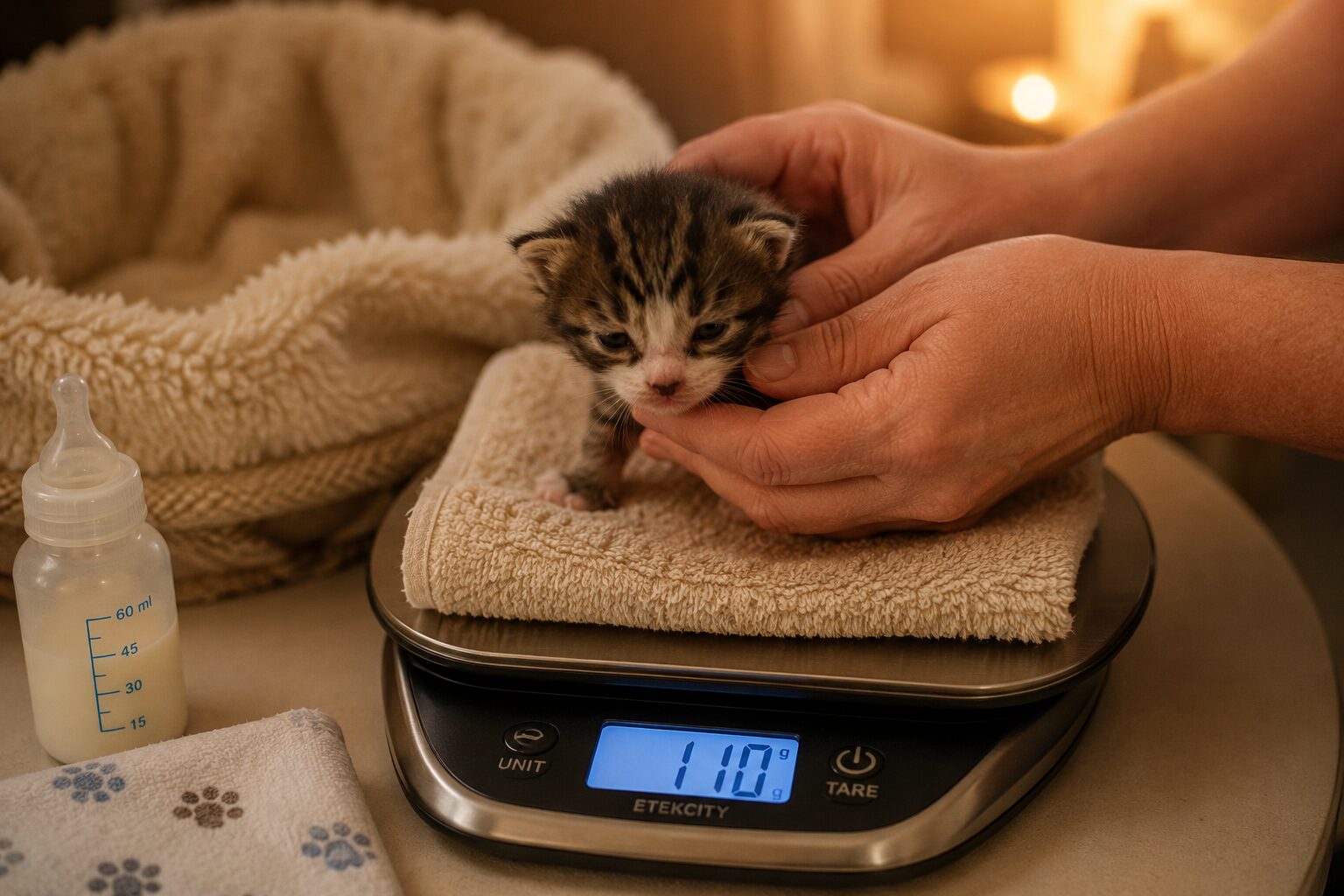
In a neonatal kitten, weight is the earliest warning you get. A kitten that stops gaining is usually a kitten in trouble a full day before anything else shows. Here’s how to weigh, what to write down, and how to catch the dip that matters, especially when a dozen hands are sharing the feedings.
-
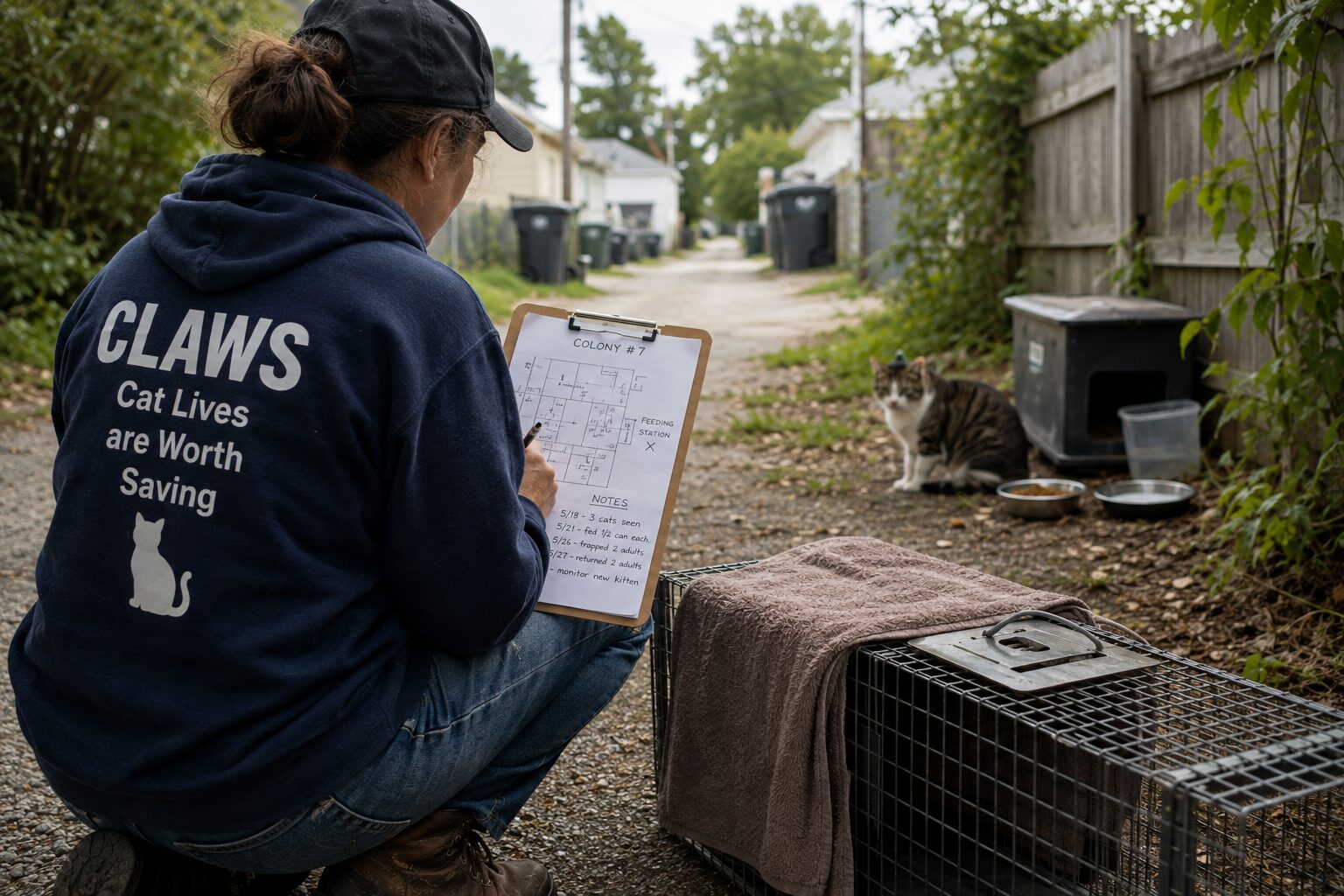
Good TNR lives or dies on good records. Which cats are fixed, who still needs trapping, and whether the colony is actually shrinking, without digging through a year of group texts. Here are the seven things worth tracking for every colony you manage.
-
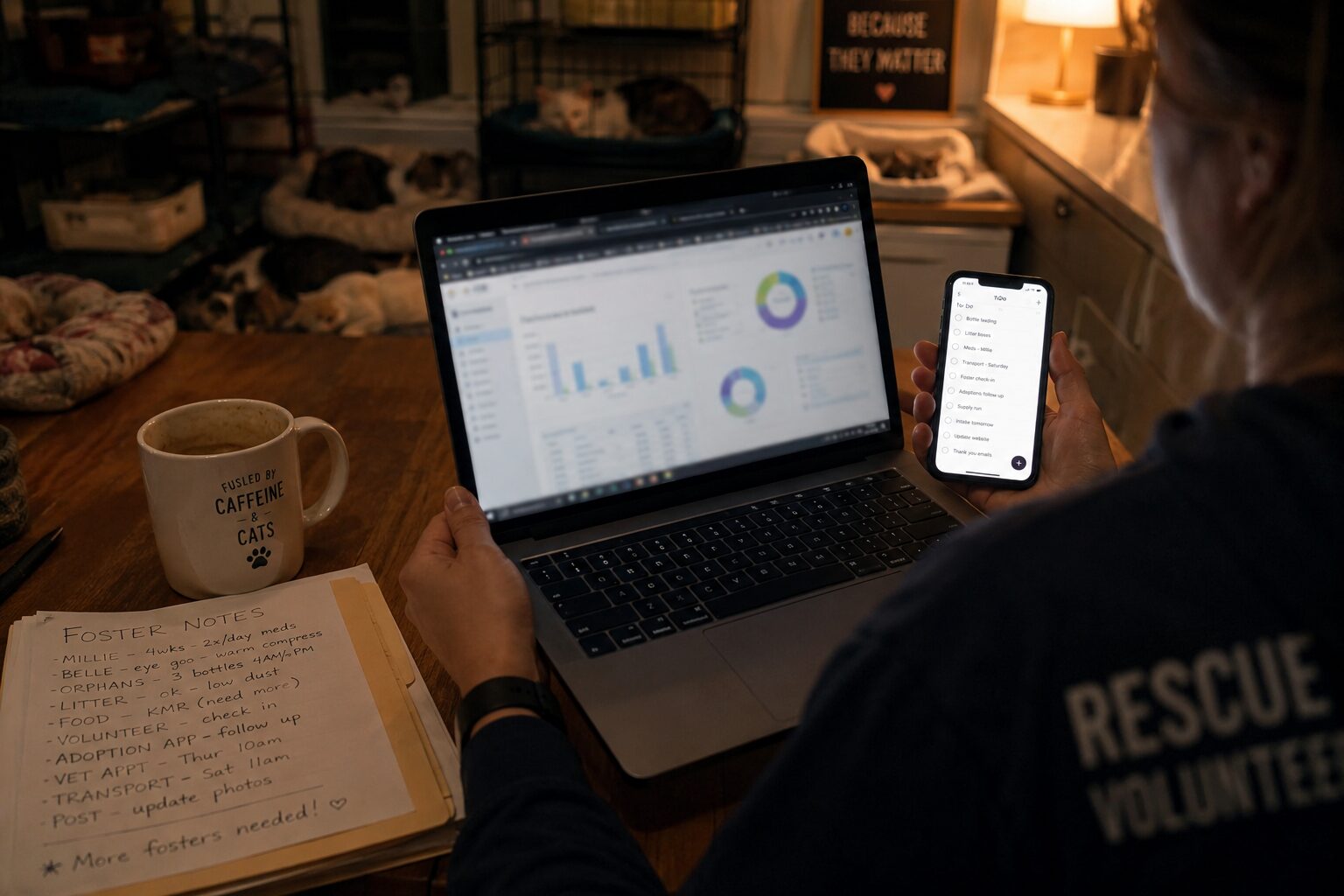
Spreadsheets were never built for 2 a.m. bottle feedings or a colony that changes every week. Purralytics is. Colony records, neonate feeding logs, medical checklists, TNR census, volunteers, and donors, all in one place, and always free for independent rescues. Meet the tool built for the way you actually work.