
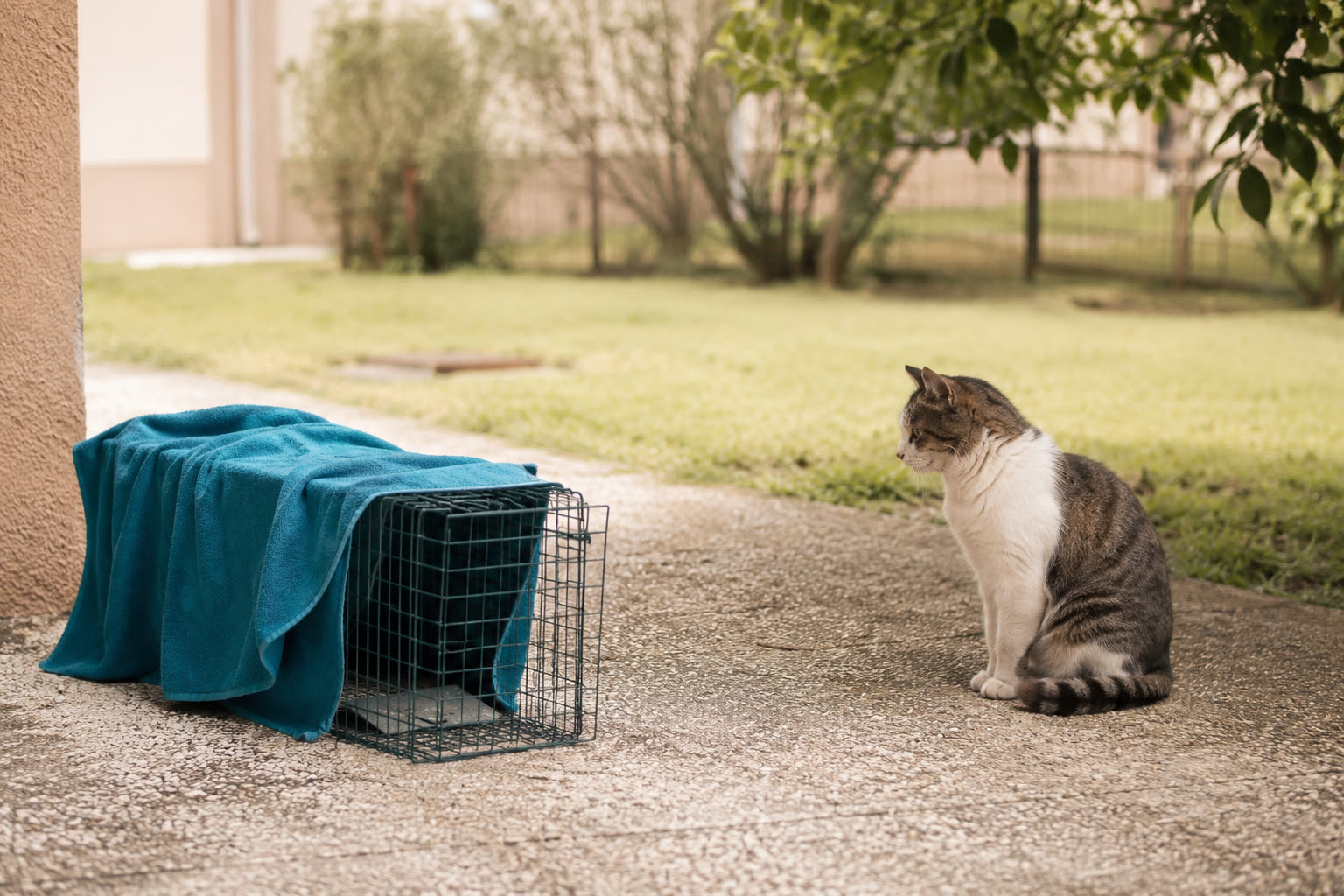
If there’s a group of cats living behind your building, in a park, or under a neighbor’s porch, you’ve probably wondered whether there’s anything you can actually do about it. There is, and it has a name: Trap-Neuter-Return, or TNR. It’s the most humane and most effective way to stabilize a feral colony, and you don’t need to be an expert to start.
Why TNR works
Removing cats from an area doesn’t keep it empty. New cats move in to fill the space and the food source, and they breed. TNR breaks that cycle instead of feeding it. A colony that’s been fully fixed stops producing litters, the yowling and fighting of mating season fades, and over time the colony shrinks naturally as cats age out. The cats that remain are healthier and quieter neighbors.
The process, step by step
- Prepare. Line up a humane trap and a spay/neuter appointment first. Many clinics offer low-cost feral surgery days; call ahead so you’re not holding a trapped cat with nowhere to take it.
- Trap. Withhold food for a day so the cats are hungry, then set baited traps around feeding time. Cover the trap with a towel to keep the cat calm once caught.
- Transport and surgery. The cat is spayed or neutered, vaccinated, and given an ear tip, a small painless notch that marks a fixed cat for life so nobody traps them twice.
- Recover. Let the cat rest overnight somewhere warm and quiet. Females often need a day or two; males usually recover faster.
- Return. Release the cat right back where you trapped it. That’s its home, and a fixed cat will live out its life there without adding to the population.
The part people forget: keeping track
The ear tip tells you a cat is fixed, but it doesn’t tell you which of the twelve cats out back still aren’t, or when the last one was done, or whether the colony is actually shrinking. That’s the record-keeping side of TNR, and it’s where good intentions quietly fall apart. Purralytics keeps each colony’s cats, their spay/neuter status, and a dated census in one place, and updates the count automatically when a cat is returned. Start free for up to three colonies.
Leave a Reply