
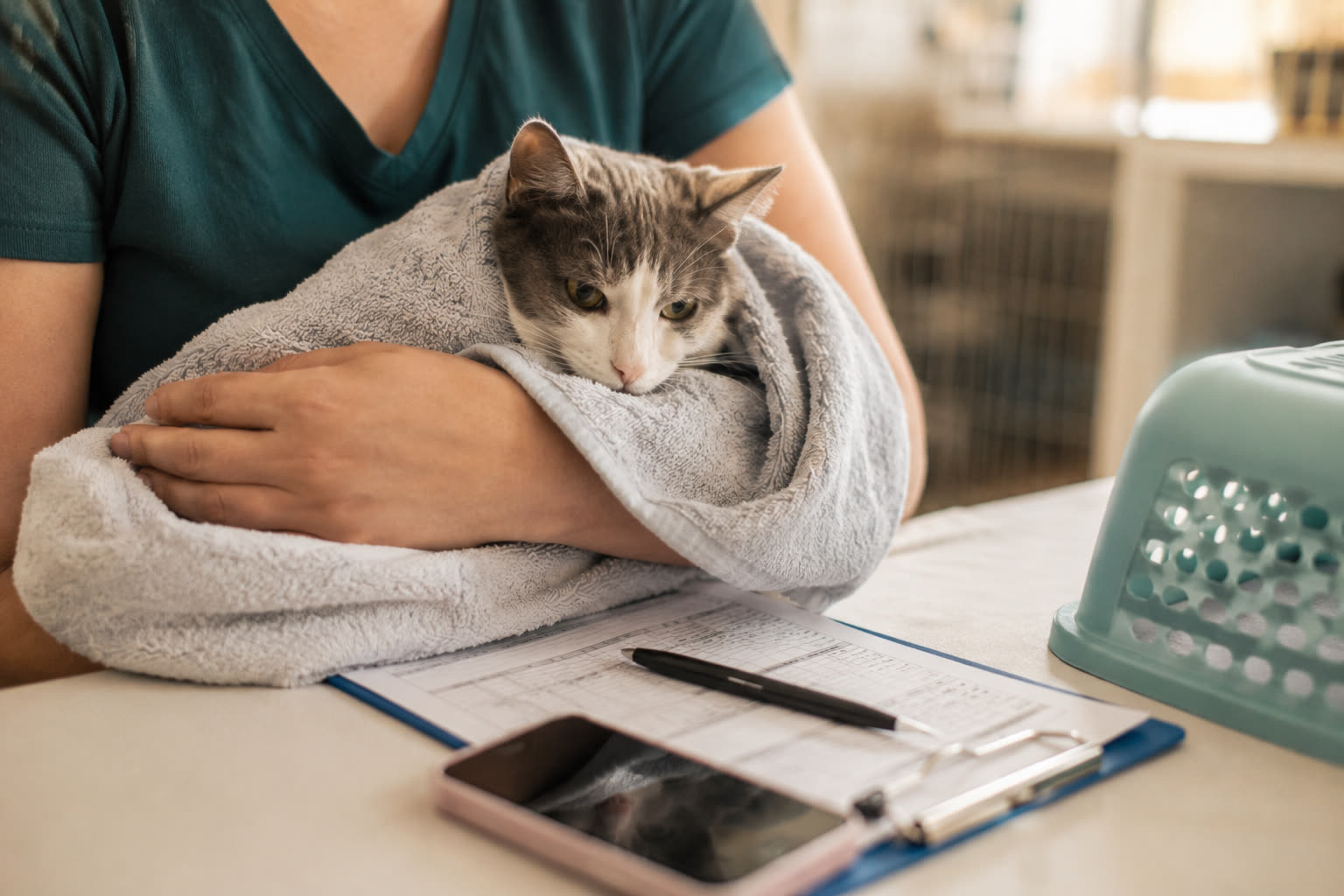
The moment a cat comes into your care is the moment you know the least about it and have the most to write down. A solid intake record is the difference between smooth care and a scramble three weeks later when nobody can remember where this cat came from or whether it’s been vaccinated. Here’s what to capture on day one.
The essentials
- Date and source. When the cat arrived and where from, a specific colony, a surrender, a good Samaritan. This matters for medical history and sometimes for legal reasons.
- A photo. One clear picture. Cats blur together fast, and a photo is what keeps records from getting crossed.
- Description and estimated age. Color, markings, and your best guess at age. Kitten milestones like open eyes or emerging teeth help you estimate.
- Weight and sex. The starting weight is your baseline for tracking progress, especially in kittens.
- Visible health issues. Eye discharge, wounds, fleas, dehydration, anything you can see. First impressions guide the first vet conversation.
- Microchip scan. Always scan. An owned cat can look exactly like a stray.
Why it pays off later
A good intake record is the spine that everything else hangs on. Medical treatments, weight checks, foster notes, and the eventual outcome all connect back to that first entry. When a cat comes back through your doors months later, that history is right there instead of lost to memory.
Purralytics turns intake into a configurable checklist that follows each cat from arrival to discharge, so nothing gets skipped on a busy day and the whole history stays in one place. Try it free.
Leave a Reply