
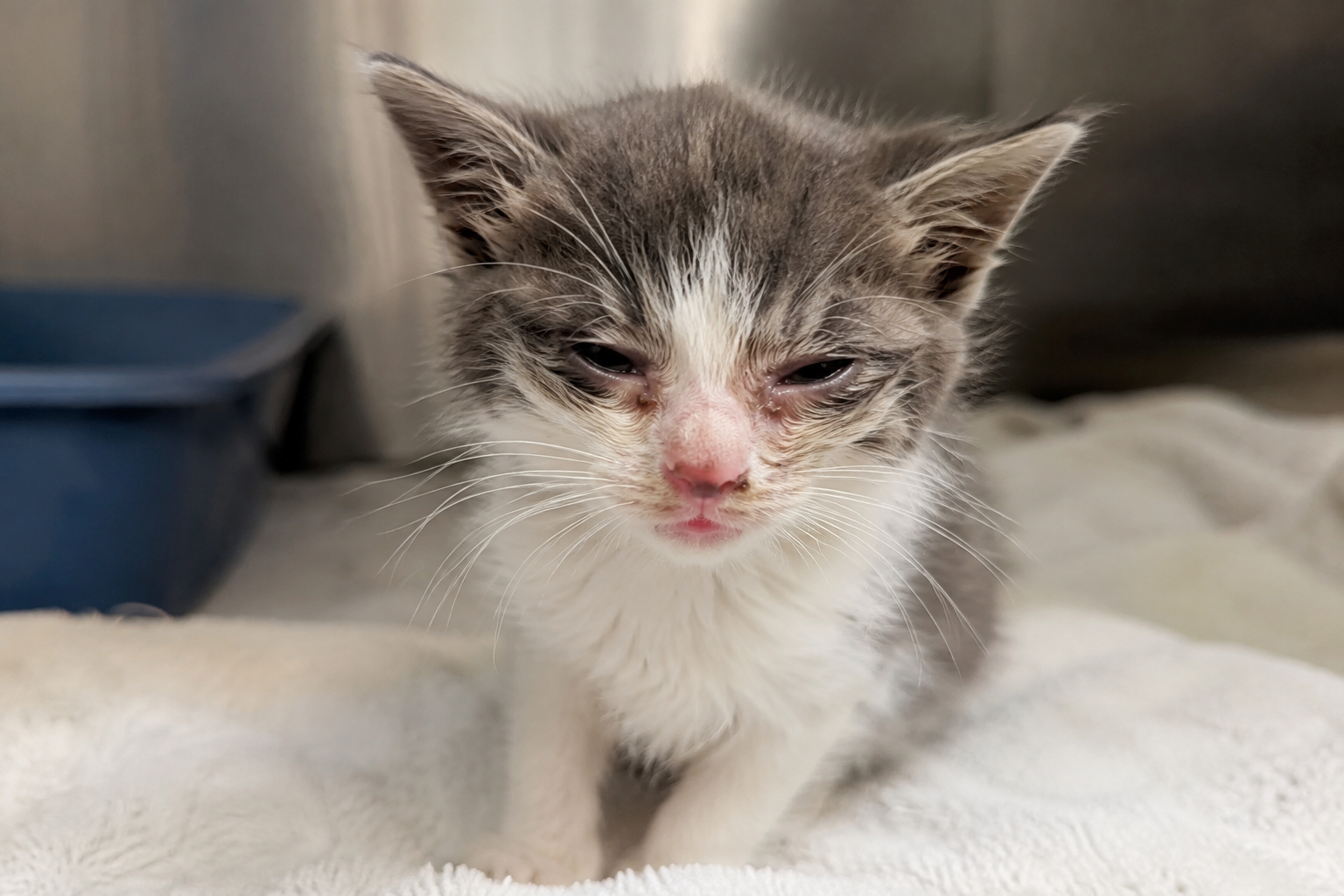
Upper respiratory infection is the most common thing a rescue will deal with. Stress, close quarters, and new arrivals make it near inevitable, and most cats come through it fine. Knowing what to watch for is what keeps a routine case from becoming a serious one.
What it looks like
- Sneezing, often in fits
- Discharge from nose or eyes, starting clear and turning yellow or green
- Squinting, pawing at the face, or an eye held shut
- Congested breathing, audible snuffling
- Lethargy and hiding more than usual
- Not eating
Why “not eating” is the line that matters
Cats decide whether to eat largely by smell. A badly congested cat cannot smell its food, stops eating, and gets weaker, which makes recovery harder. That is the mechanism that turns a mild illness into a dangerous one, and it is why appetite is the vital sign to watch rather than the sneezing itself.
Warm the food to bring the smell up. Strong-smelling wet food beats dry. Gently wipe the nose clear with a warm damp cloth before offering a meal.
Home care that helps
- Humidity. Ten minutes in a steamy bathroom loosens congestion noticeably.
- Warmth and quiet. Stress prolongs URI, so reduce handling and traffic.
- Clean the face. Crusted eyes and noses get worse if left.
- Isolate. It spreads easily, so separate the patient, wash hands, and change your shirt between cats.
Call the vet when you see
- No food for 24 hours, or any refusal to eat in a kitten
- Labored or open-mouthed breathing
- An eye that is cloudy, ulcerated, or bulging
- Marked lethargy, or dehydration
- A kitten under eight weeks with any symptoms at all
Kittens have almost no reserves. What a healthy adult shrugs off in a week can be life-threatening to a five-week-old in a day.
The record is what protects the rest of the group
When symptoms started, which cats were housed nearby, what was given and when, whether it resolved. That history is what tells you if you are watching one sick cat or the start of something moving through the room.
Purralytics tracks treatments and notes on each cat’s own record, so a pattern across several cats is visible rather than something you piece together later. Try it free.
This is general guidance for caregivers, not veterinary advice. When in doubt, call your vet.
Leave a Reply