
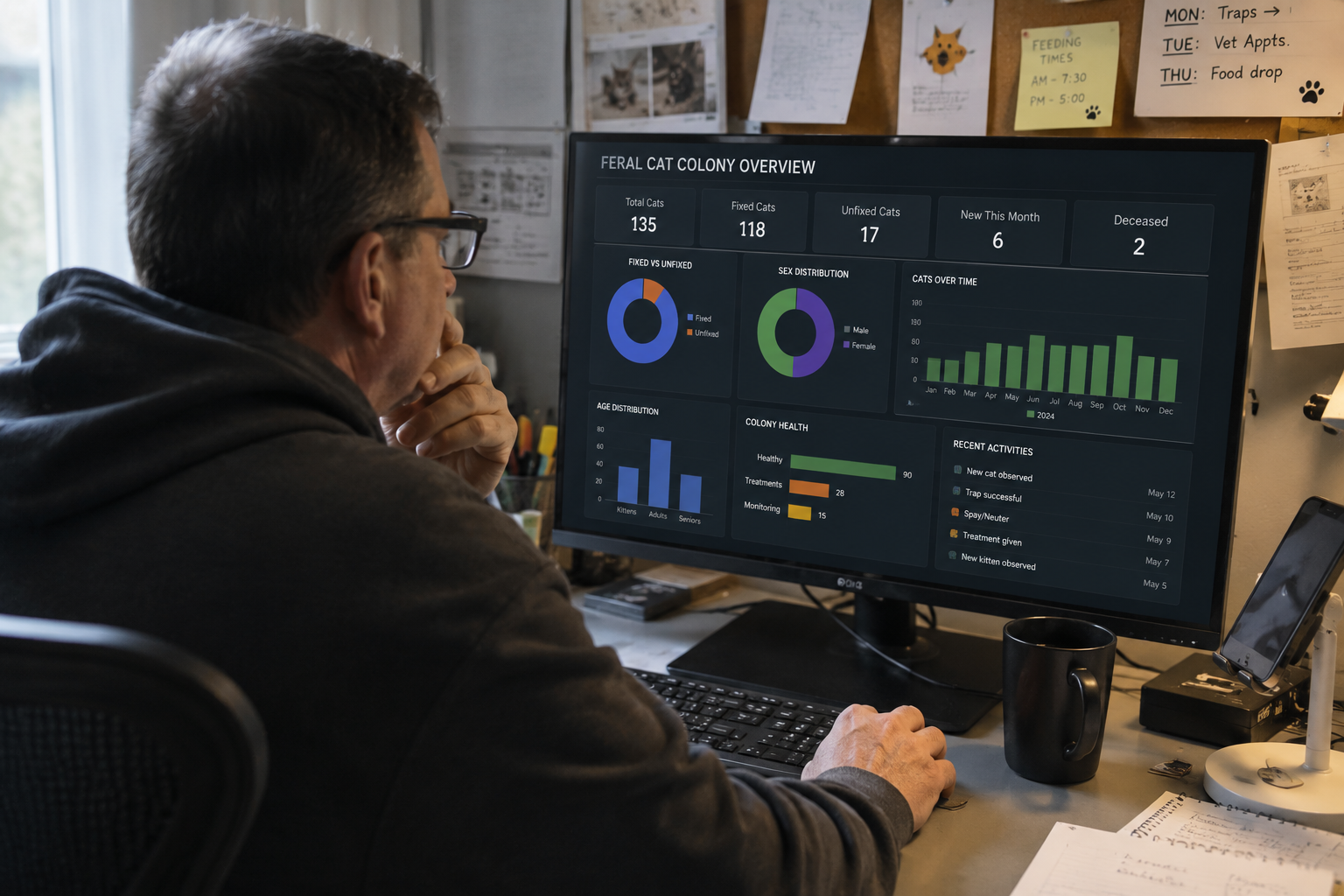
Most small rescues are doing genuinely fundable work and losing applications anyway, because the application asks for outcomes and all they can offer is effort. The gap is rarely the work. It is the record of the work.
What funders are actually asking
Almost every grant question is a version of: what changed because you existed, and how do you know? “We care for cats in our community” does not answer it. “This colony went from twenty-four cats to nine over three years, with forty-one cats sterilized” answers it completely.
The numbers worth having
- Population over time. Dated colony counts. The trend line is the single most persuasive thing you own.
- Spay and neuter totals. How many, over what period, at which colonies.
- Cost per cat. Total spend divided by animals served. Funders think in efficiency, and small rescues usually look excellent here.
- Volunteer hours. Often convertible to matching in-kind contribution, which strengthens a budget.
- Outcomes. Returned, adopted, relocated. Closing the loop on each animal.
- Geographic scope. How many colonies, which neighborhoods. Reviewers want to picture the territory.
Start before you need it
This is the whole trick, and it is unglamorous. A grant deadline is four weeks out and three years of history cannot be reconstructed from memory and a shoebox of receipts. The rescue that wins is usually the one that was already writing things down when nobody was asking.
If you take nothing else from this: start dating your colony counts today, even roughly. In two years that ordinary habit becomes the most valuable asset in your application.
Photographs count as data
A before and after of a colony site, or an ear-tipped cat in the location it was returned to, does work that a spreadsheet cannot. Keep them, and keep them labeled with where and when.
Reporting is the other half
Winning a grant creates an obligation to report on it, and rescues that report cleanly get funded again. The same records that won the money produce the report almost for free.
Purralytics saves every colony update as a dated snapshot and reports on trends, intakes and discharges, volunteer hours, and donor activity, which means the application and the follow-up report are drawn from records you were already keeping. Try it free for up to three colonies.
Leave a Reply