
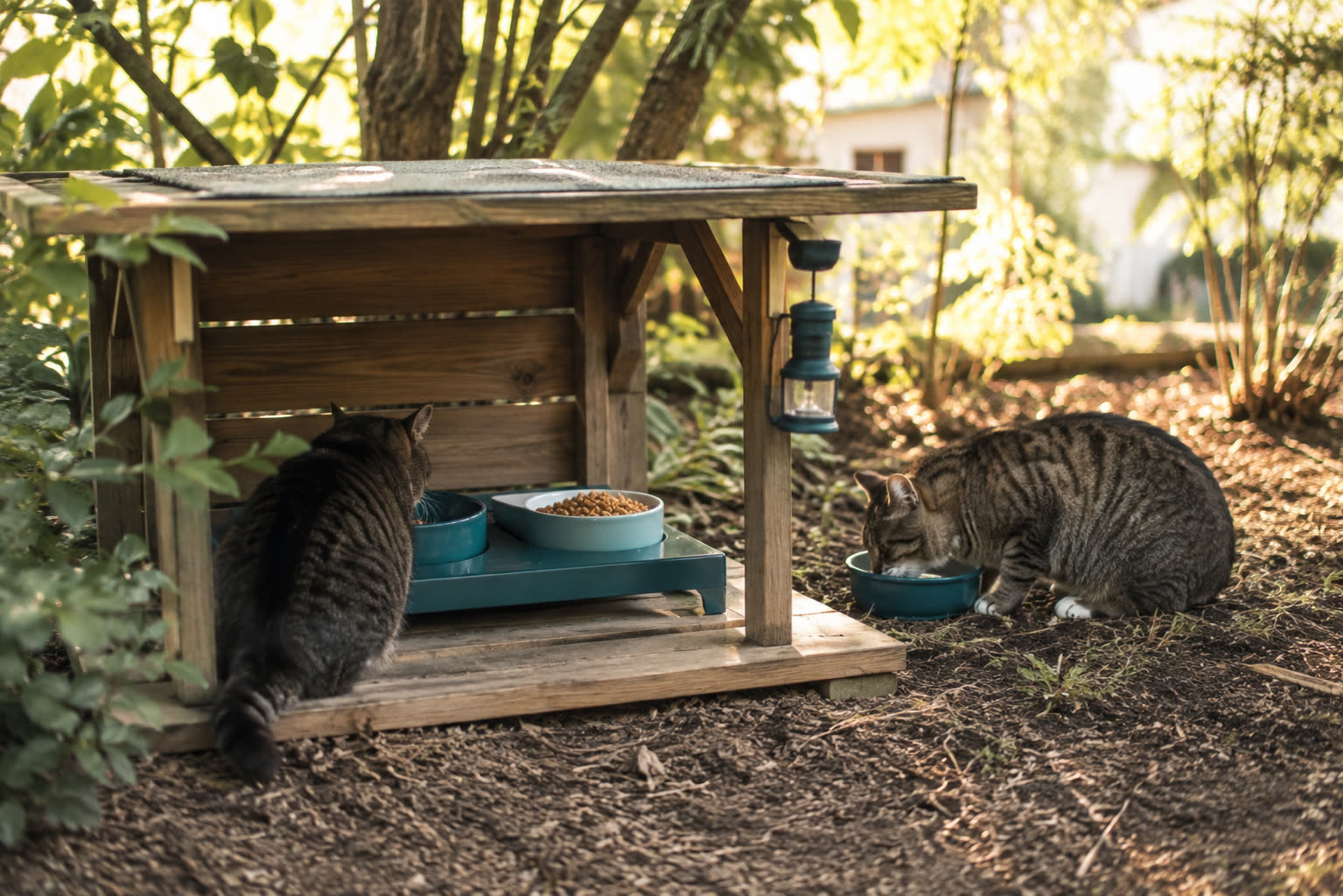
Feeding a colony from a different spot every day makes everything harder. A single, consistent feeding station keeps the cats healthier, makes trapping far easier when it’s time for TNR, and gives you one reliable place to notice a new face or a cat that isn’t looking well. Here’s how to set one up.
Pick the right spot
Choose somewhere quiet, out of foot traffic, and a little hidden, cats won’t relax at a station in the open. Keep it away from busy roads and, if the land isn’t yours, get the property owner’s okay first. A station that annoys a neighbor is a station that gets torn down, so discretion protects the cats as much as the food does.
Build for weather and pests
- Raise the feeding surface off the ground to deter ants and keep it dry.
- Add a simple roof or place it under existing cover so rain doesn’t ruin the food.
- A storage bin turned on its side, or a wooden feeding box with an overhang, works well and stays put in wind.
- Always offer clean water alongside the food, especially in summer.
Keep a routine
Feed at the same time each day and take up leftover wet food after 30 minutes or so, both to keep the area clean and to avoid drawing wildlife. A predictable schedule also means the cats are present and hungry at a known time, which is exactly what you want when trapping day comes.
When more than one person shares feeding duty, a station only works if everyone knows who’s covering which days and what they saw. Purralytics lets your caretakers log feedings and note anything unusual on a shared record, so a gap in coverage or a sick cat gets caught early instead of a week late. See how it works, free.
Leave a Reply