
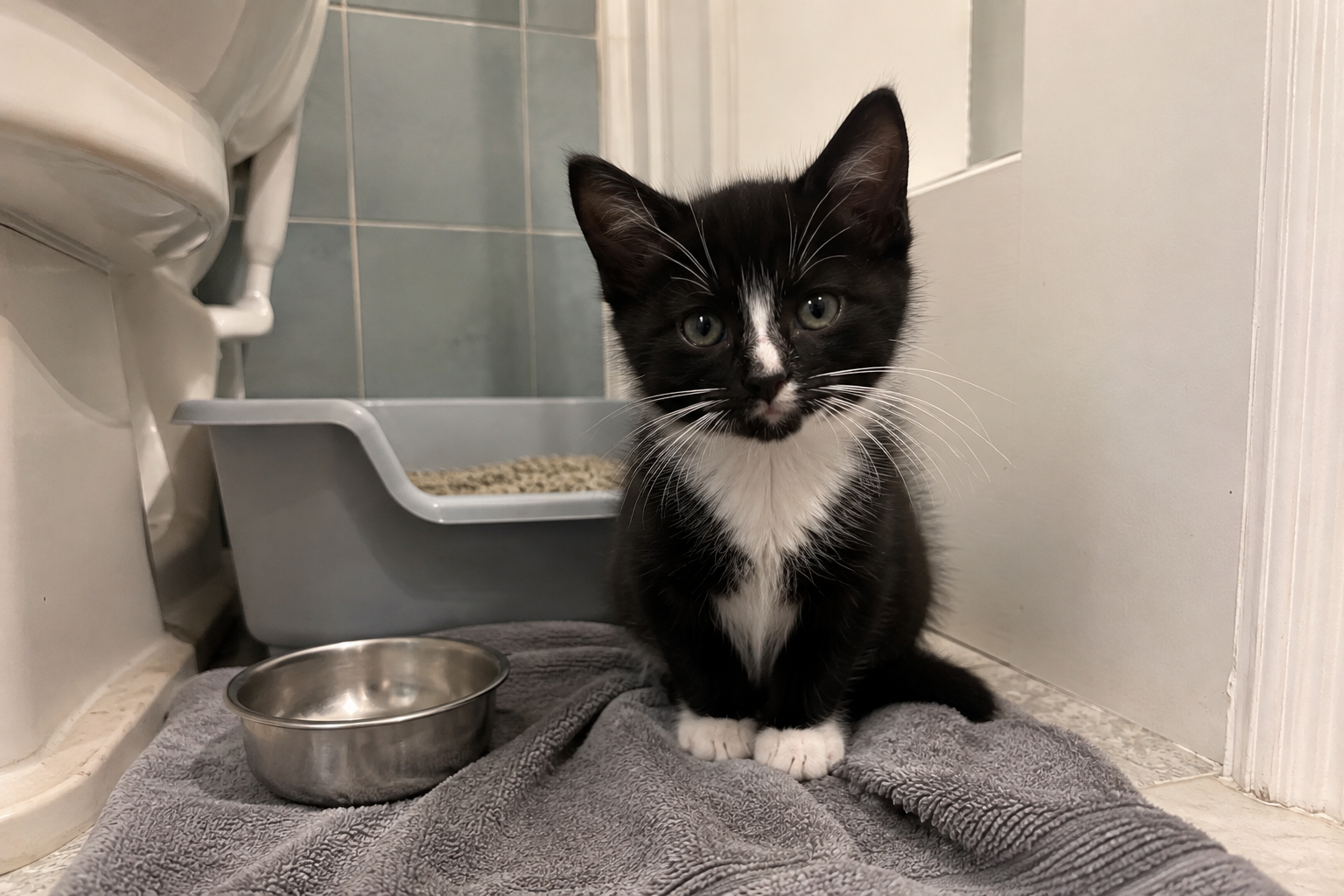
Every experienced rescuer has a version of this story: a new cat that looked completely fine, went straight into the general population, and a week later everyone was sick. Quarantine is the least glamorous part of intake and the part that protects everything else you are doing.
Two weeks, because that is how incubation works
Ten to fourteen days is the standard, and the reason is simple: most of what you are worried about takes that long to show itself. A cat can be shedding virus and look perfect for days. The waiting period is not about the cat you can see, it is about the one you cannot see yet.
What quarantine looks like in an actual house
- A door that closes. A spare bedroom or bathroom. Not a crate in the living room, and not a room the other cats can reach under the door.
- Its own supplies. Separate bowls, litter box, scoop, towels, toys. Do not rotate them out to the general population.
- Feed the quarantine room last. Then wash your hands, and change your shirt before you touch anyone else.
- Wash what you can, bleach what matters. A dilute bleach solution handles most of what soap does not, on surfaces that tolerate it.
What to actually watch for, daily
Appetite, litter box output, sneezing or eye discharge, energy level, and weight in kittens. A one-line note each day is enough, and it means you can tell the vet when something started rather than guessing.
The one that scares everybody
Panleukopenia is why quarantine is not optional. It is highly contagious, it survives a long time in an environment, and it kills kittens quickly. Sudden vomiting, diarrhea, and profound lethargy in a new arrival is an immediate vet call, not a wait-and-see.
The hardest part is not the protocol
It is remembering, on day nine, exactly which day a particular cat came in, when the fourteen days are up, and which cats it might have crossed paths with in the first hour before you got it settled.
Purralytics puts intake on a configurable checklist with dates that follow each cat from arrival through discharge, so quarantine has a real start and end rather than a rough feeling that it has probably been long enough. Start free.
This is general guidance for caregivers, not veterinary advice. Your vet should set protocol for your specific situation.
Leave a Reply