
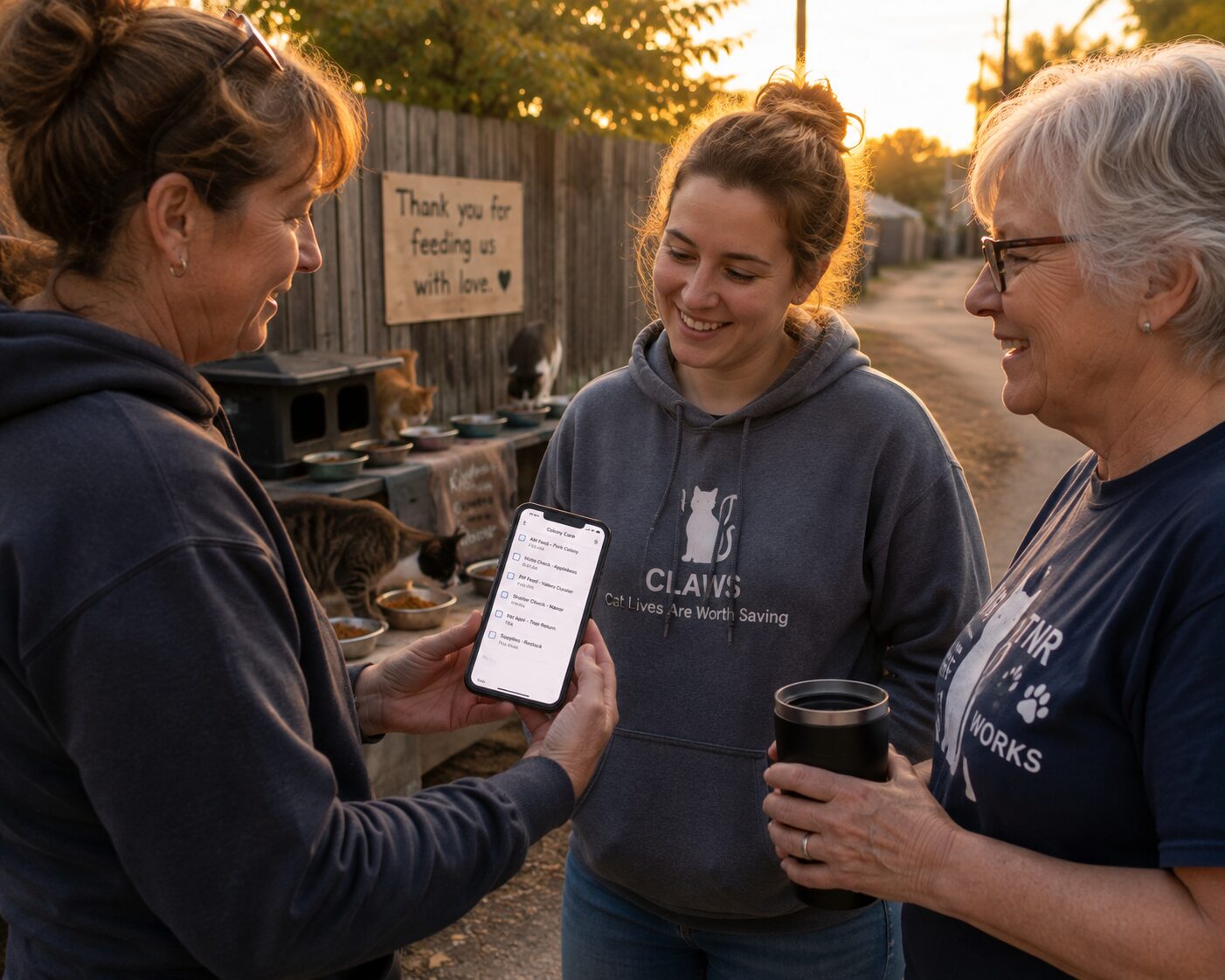
Most colonies aren’t cared for by one person. They’re cared for by a rotating cast: the neighbor who feeds on weekdays, the retiree who covers weekends, the volunteer who fills in whenever someone’s sick. That’s a strength, more eyes on the colony, more resilience when life gets in the way. It’s also exactly where things go wrong.
Why the group chat breaks down
A group chat is great at communication and terrible at record-keeping. Messages scroll past. “I’ll grab it tomorrow” gets said twice and covered zero times. Nobody can scroll back three weeks to answer “when was this cat’s last vaccine” or “has anyone seen the gray tom this week.” The chat tells you what people said. It doesn’t tell you what actually happened.
What actually needs to be tracked
- Who’s covering which days. A real schedule, not a standing offer to “grab it if no one else does.”
- What happened at each visit. Fed, watered, anyone missing, anyone looking off.
- Volunteer hours. Useful for grant reporting and for recognizing the people doing the work.
- Who has access to what. Not every volunteer needs to see donor records or medical history; some just need to log a feeding.
Role-based access solves the oversharing problem
One reason coordinators end up doing everything themselves is a reasonable fear: give everyone full access and someone eventually changes something they shouldn’t. The fix isn’t less delegation, it’s scoped delegation. A volunteer logging a feeding doesn’t need to see your donor list. A trapper doing TNR intake doesn’t need to touch financial reports.
Purralytics builds this in with role-based access, so volunteers can log hours and field data directly, coordinators see the full picture, and everyone only sees what their role actually needs. Everyone’s looking at one shared record instead of one crowded group chat, and coverage gaps show up before a feeding station goes cold, not after. See how it works, free.
Leave a Reply